

From Cooling Towers to Tap Water: The Hidden Sources of Legionella in Buildings and Industry
|
While outbreaks often make headlines when linked to cooling towers, the truth is that Legionella can lurk in many other areas of a building or industrial site, sometimes in places we least expect.
In this article, we’ll explore the hidden sources of Legionella contamination, the factors that allow it to thrive, and how advanced monitoring technology can help reduce the risk before it becomes a costly crisis.
Sources of legionella contamination
Although cooling towers are the most recognised risk, they are far from the only culprits. Legionella bacteria can establish themselves anywhere water is stored, distributed, or allowed to stagnate under favourable conditions.
From decorative fountains and hot tubs to plumbing systems and industrial water circuits, each environment presents unique challenges for control and monitoring.
Cooling towers: the usual suspect
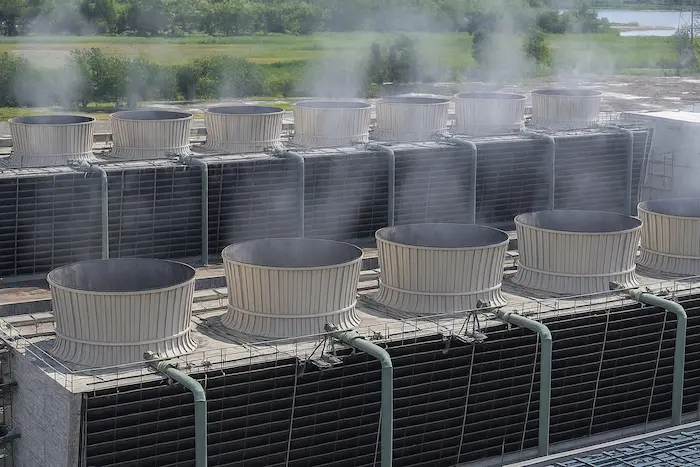
Cooling towers are perhaps the most widely publicised source of Legionella.
These large heat-rejection systems provide an ideal environment for the bacteria: warm water, high surface area, and a complex internal structure that can harbour biofilms.
Poor maintenance or inadequate water treatment can quickly lead to bacterial growth, which can be dispersed into the air through aerosols.
Regular cleaning, biocide treatment, and ongoing monitoring are essential but they’re only part of the picture.
Domestic hot and cold water systems
Legionella isn’t just an industrial problem it can flourish in domestic water systems too.
Hot water tanks, cold water storage cisterns, and long stretches of pipework where water is stagnant are prime habitats.
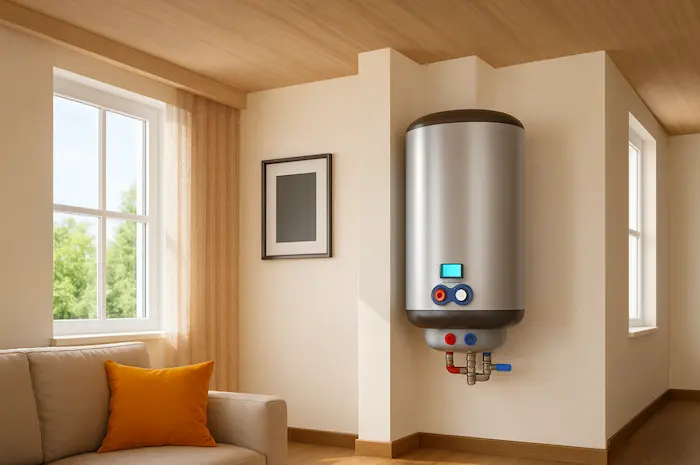
In particular, dead legs (sections of pipework with no flow), underused outlets, and inconsistent water temperatures create the conditions Legionella needs.
This means residential complexes, hotels, hospitals, and office buildings are all at risk if water systems aren’t properly managed.
Humidifiers and evaporative condensers
Devices designed to add moisture to the air, such as humidifiers, misters, or evaporative condensers, can also become breeding grounds if they aren’t cleaned and maintained.
In industrial or agricultural settings, where such systems may run continuously, the risks increase significantly.
Spa pools and decorative fountains
Warm, aerated water features like spa pools, whirlpools, and even ornamental fountains can harbour Legionella if they aren’t regularly treated and maintained.

Public and leisure facilities must remain vigilant, as these environments create high-risk aerosol exposure.
Why are these sources often overlooked
One of the biggest challenges in Legionella prevention is awareness.
Many facilities focus heavily on cooling towers due to regulatory requirements but neglect other water systems that present similar risks.
Without comprehensive monitoring, outbreaks can emerge from unexpected locations causing reputational damage, regulatory scrutiny, and serious health consequences.
How real-time monitoring changes the game
Traditional Legionella risk management relies heavily on periodic manual inspections and temperature checks. While important, these spot checks leave long windows of time when conditions may be unsafe — and undetected.
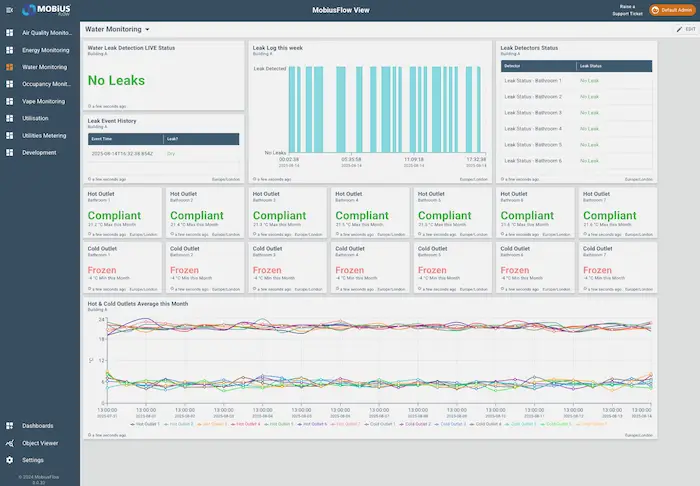
By integrating IoT sensors and data platforms, organisations can monitor key risk indicators in real time, including:
- Water temperature and flow rates to ensure they remain outside the Legionella growth range
- Residual disinfectant levels to confirm effective water treatment
- Anomalies in system performance that could indicate stagnation or contamination
Where MobiusFlow fits in
MobiusFlow enables continuous Legionella risk monitoring by connecting a wide range of IoT sensors, regardless of protocol or vendor, into a single, secure platform.
- Track water temperatures and flow conditions across your facility in real time
- Trigger alerts when risk thresholds are breached
- Automatically log compliance data for audits and reporting
- Integrate insights into your existing BMS or compliance systems
Whether it’s a cooling tower, domestic water supply, or decorative fountain, MobiusFlow provides the visibility and control needed to reduce Legionella risks and stay ahead of compliance requirements.
Ready to see how real-time monitoring can protect your people and your reputation?
Book a 15-minute demo with one of our engineers today and discover how MobiusFlow can turn your existing infrastructure into a powerful Legionella risk management tool.
