
ESOS PHASE 4 | ENERGY MONITORING
Bring your energy data together for ESOS
Compare meter readings with operating hours to spot demand after closing. MobiusFlow connects compatible meters and building systems so you can use their records in your Energy Savings Opportunity Scheme (ESOS) assessment.
SAMPLE METER READINGS
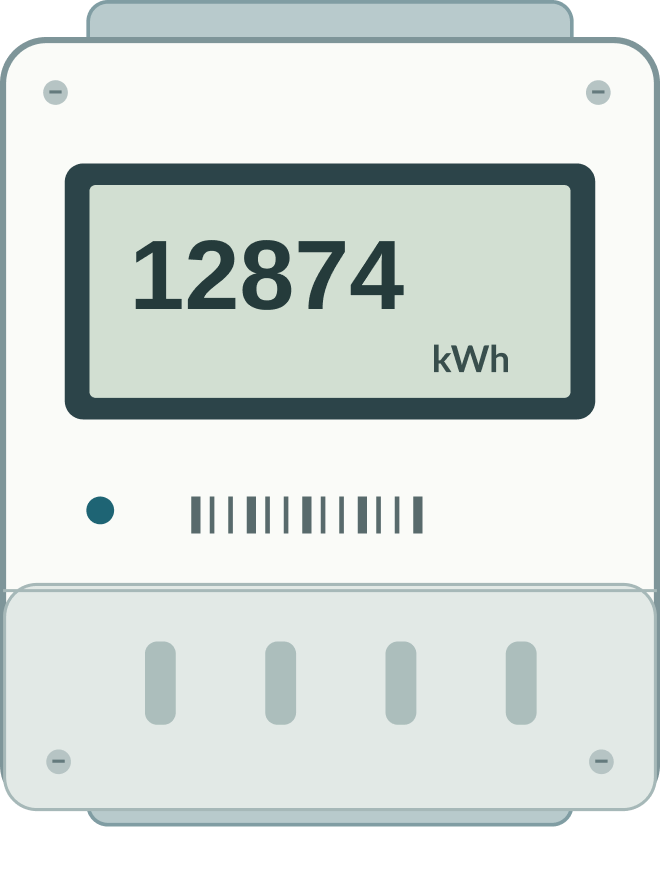
Register (kWh)
18:00
12,840
20:00
12,874
34 kWh
used after closing
What used 34 kWh after closing?
SAMPLE DATA
Workshop electricity use
kWh per half hour
20
15
10
5
0
Workshop closes
16:00
17:00
18:00
19:00
20:00
Before closing
After closing
Sample workshop electricity use in half-hour intervals: 15, 16, 15 and 14 kWh before 18:00 closing; 9, 9, 8 and 8 kWh after closing, totalling 34 kWh.
What used 34 kWh after closing?
The workshop closed at 18:00, but the meter recorded another 34 kWh by 20:00. The readings show when the electricity was used. Ask the shift supervisor which equipment needed to stay on.
Trace the reading
Match the meter ID to the workshop circuit. Keep its timestamped kWh records and check the interval total against the change in that meter’s register.
Test the explanation
Compare the same hours on evenings with a similar shift. Check the fan schedule and production log before changing a timer.
Measure the change
If the schedule changes, record the date. Compare kWh on similar shifts before and after, noting any change in output. Use that comparison to estimate savings.
Where MobiusFlow fits
MobiusFlow Engine puts readings from supported meters and building systems into a common format. Your integrator configures storage, calculations and reporting for the site. Your team can then use MobiusFlow View or another reporting tool to compare readings with shift times.
Who needs to prepare for Phase 4?
Phase 4 dates
Qualification date
31 December 2026
Compliance notification due
5 December 2027
The Energy Savings Opportunity Scheme covers large UK organisations and their corporate groups. A UK organisation meets the size test if it has:
- at least 250 people employed under ESOS rules, or
- annual turnover above £44 million and a balance sheet total above £38 million.
One qualifying UK organisation can bring other UK members of its group into scope. An established undertaking generally changes size category only after meeting the new criteria for two consecutive accounting periods.
The assessment covers energy used in buildings, industrial processes and transport. Meter records are one source of evidence. Your organisation is responsible for the assessment, sign-off and notification to the Environment Agency.
Prepare your records for ESOS
Choose the reporting year
Choose 12 consecutive months that include 31 December 2026 and end before 5 December 2027. January to December 2026 is one valid choice.
Account for gaps
Start with bills, meter readings and half-hourly files. If a gap in the total needs an estimate, keep the reason, source and calculation in your evidence pack and tell the scheme administrator.
Record completed measures
Record each energy-saving measure implemented from 6 December 2023 to 5 December 2027, its estimated kWh savings during that period and how you calculated them.
Review the previous action plan
If a Phase 3 action plan was required and you have energy use to report, identify any measures that will not be implemented by 5 December 2027 and explain why.
Discuss your energy data
Bring a meter reading and your site’s operating hours. We can look at which meters you can connect and how much history you need.
An integrator can survey the site, connect the meters and commission the system. See how IAConnects installs energy monitoring ↗