

Best IoT platforms for legacy system integration
|
Today, businesses face a critical challenge: harnessing the power of cutting-edge IoT innovations without abandoning the reliable legacy systems they’ve invested in for years.
According to Gartner’s analysis of the best global IoT platforms, many organisations find themselves at this crossroads, with mission-critical operations running on older infrastructure that works perfectly well—except for its limited connectivity capabilities.
In this article, we’ll explore how forward-thinking businesses successfully navigate this integration challenge and the practical steps you can take to unlock new capabilities from your existing infrastructure.
Understanding Legacy Systems and IoT Integration
Legacy systems are older technologies that companies continue to use despite their age.
These systems often handle critical business operations but may not have the connectivity features of modern alternatives.

IoT integration with these systems offers several benefits:
However, many industrial and commercial companies still rely on more than a decade-old equipment, making this integration particularly valuable.
What to look for in IoT platforms for legacy integration
When evaluating IoT platforms for connecting with older systems, several criteria should guide your decision:
Firstly, the platform should work with various communication protocols used by legacy equipment (MQTT, BACnet, Modbus, OPC UA, etc.)
As your needs grow, the platform should easily accommodate more devices and data without performance issues.
You should also look for strong encryption, authentication, and access controls to protect sensitive data.
Moreover, having the ability to customise the platform for your specific business requirements is critical for successful integration.
Best Practices for IoT implementation
Successfully implementing IoT integration with legacy systems requires careful planning.
Let’s talk about some essential practices that can help ensure your project’s success.
Assessing existing infrastructure
When you begin this journey, you must first thoroughly assess your existing infrastructure.
Take time to map out all your systems and identify potential integration points.
Understanding what you have is the foundation before you can determine how to connect everything.
Security
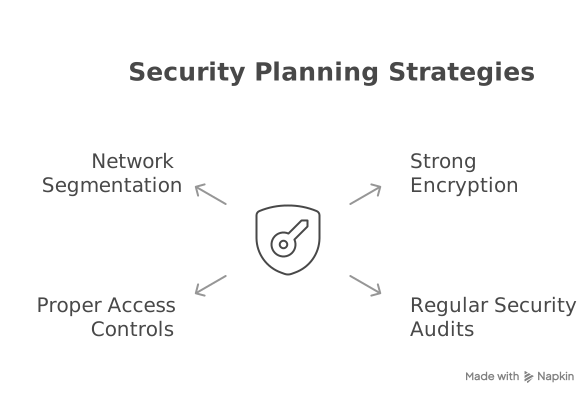
Security should be at the forefront of your planning. We recommend implementing:
Consider creating separate network segments for different types of systems, which can help contain any potential breaches.
Planning for future growth
As you design your integration, think about future growth. Choose platforms that can scale and future proof your business needs and create your architecture to accommodate expansion without requiring significant overhauls.
One thing that’s often overlooked is stakeholder engagement.
Make sure to include both IT and operations teams in your planning process. Their combined knowledge and perspectives will help identify potential issues before they become real problems during implementation.
Starting small: Pilot projects for effective transformation
Finally, don’t try to transform everything at once.
Start with smaller pilot projects to test your approach before committing to full deployment.
This approach allows you to identify and address issues with minimal disruption to your ongoing operations.
Moving forward with legacy and IoT integration
Integrating IoT capabilities with legacy systems offers a practical path to modernisation without the cost and disruption of complete replacement.
By selecting the proper integration platform and following implementation best practices, companies can extend the life of existing assets while gaining the benefits of modern IoT technology.
Businesses ready to explore these opportunities can book a demo to get started with MobiusFlow. In the demo, we’ll give you a proper MobiusFlow overview to help you decide if it’s the right platform for your business.
With proper planning and the right tools, even decades-old equipment can participate in the connected future of industrial IoT.
