

Energy management strategies for large facilities: How to cut costs and improve efficiency
|
In today’s business world, facility managers face mounting pressure to optimise energy consumption.
With inefficient systems wasting up to 30% of energy in commercial buildings, finding advanced solutions for energy management isn’t just good practice—it’s essential for business survival.
Why energy management has become critical
Large facilities represent significant energy consumers globally, translating directly into substantial operating costs and considerable carbon footprints.
“The energy demands of large facilities aren’t just an environmental concern—they’re increasingly becoming a financial imperative,” notes a recent comprehensive study on building energy efficiency.
With fluctuating energy prices and intensifying regulatory pressures, facilities that once operated with minimal oversight now face stringent requirements.
Common challenges in facility energy management
Most facilities face several obstacles when optimising energy usage:

Key strategies for effective energy management
Real-Time Monitoring and Analysis
Modern energy management systems provide continuous data on consumption patterns across all facility systems.
This visibility allows managers to identify anomalies, understand consumption patterns, and quantify the impact of efficiency measures with precision.

Smart Automation for Dynamic Response
Advanced facilities use responsive automation that makes real-time adjustments based on occupancy, production schedules, weather forecasts, and energy pricing fluctuations.
These systems work continuously in the background, yielding significant savings without sacrificing comfort or productivity.
Centralised insights for better decision-making
A unified dashboard can compare performance across facilities, prioritise investments based on potential ROI, track progress toward sustainability goals, and provide clear visualisations of energy initiatives.
Legacy system integration through iot
IoT devices and multi-protocol gateways can connect to existing equipment, extracting valuable data and enabling control without wholesale replacement.
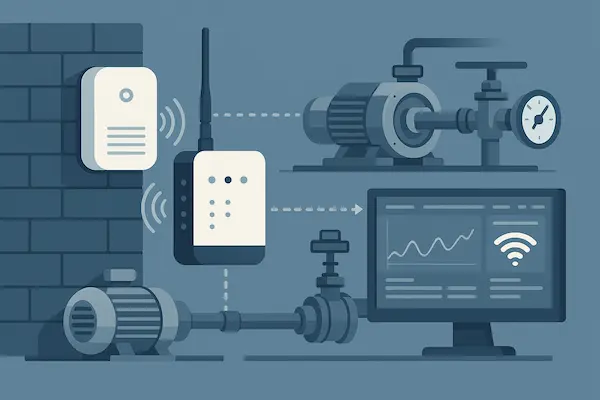
This extends equipment life while implementing modern monitoring capabilities.
How MobiusFlow solves these complex challenges
The MobiusFlow platform addresses the interconnected challenges of modern facility energy management with multi-protocol support spanning everything from legacy systems to modern sensors.
This creates a cohesive data environment where previously disconnected systems work together.
The platform’s scalable architecture suits single-site operations and global enterprises with multiple facilities.
Its integration with Node-RED enables sophisticated workflow automation without extensive custom programming, allowing facilities teams to implement energy-saving strategies themselves.
You can find out more about MobiusFlow and its comprehensive capabilities for facility energy management on our platform page.
The Bottom Line: Energy management as a strategic advantage
Effective energy management delivers more than cost savings.
Organisations that excel in this area often discover additional benefits, including:
By transforming energy from a fixed overhead cost to a strategically managed resource, forward-thinking organisations gain competitive advantages while reducing their environmental impact.
Ready to explore how MobiusFlow can transform your facility’s energy performance?
Book a demo today and take the first step toward comprehensive energy management.
